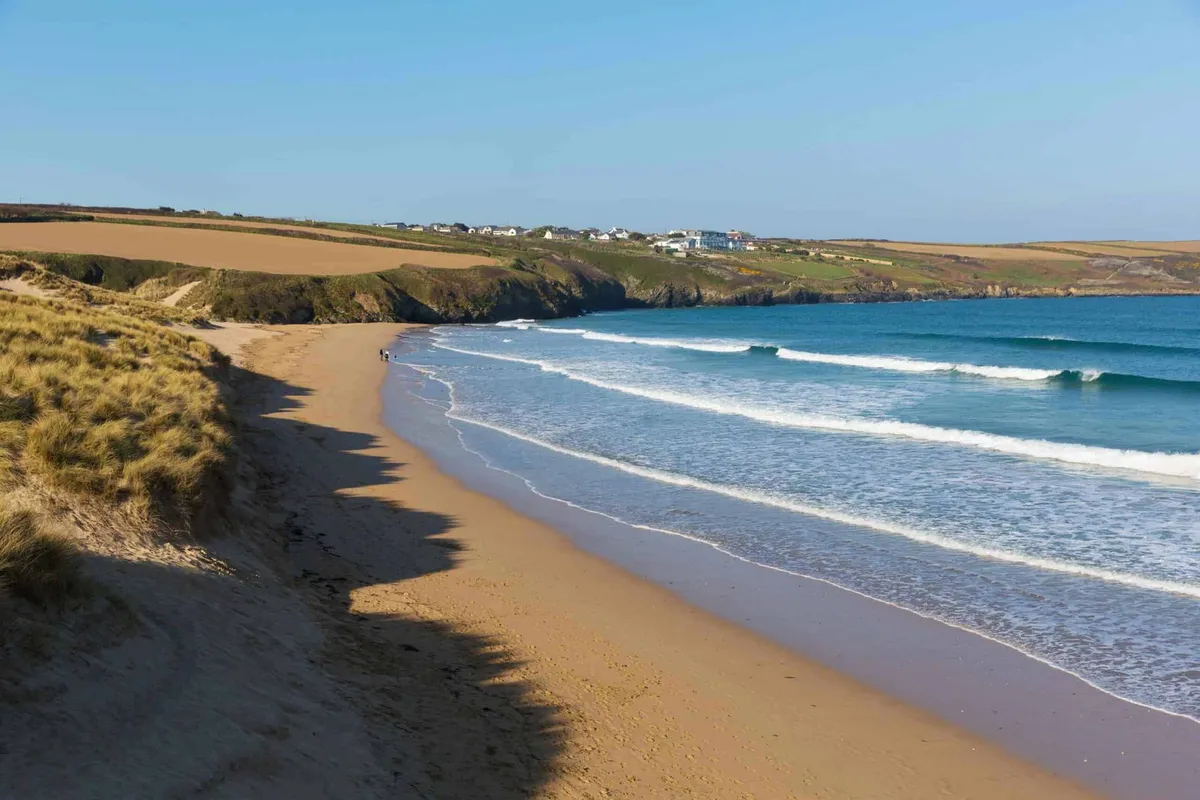
Cornwall’s north coast faces the full fetch of the Atlantic, picking up swells that have travelled thousands of miles of open ocean. That geography - combined with a coastline of sand-bottom beach breaks, reef setups, and sheltered coves - makes it the best surfing region in England by some distance. Fistral Beach alone hosts WSL-rated competitions most years, and there are at least a dozen other quality breaks within an hour’s drive.
This guide covers the beaches worth paddling out at, matched to your ability level, plus practical detail on surf schools, forecasting, gear hire, and where to base yourself.
Beginner Surf Beaches
If you’re learning, you want a sandy bottom, a gentle slope, and waves that break slowly. All three beaches below meet those criteria.
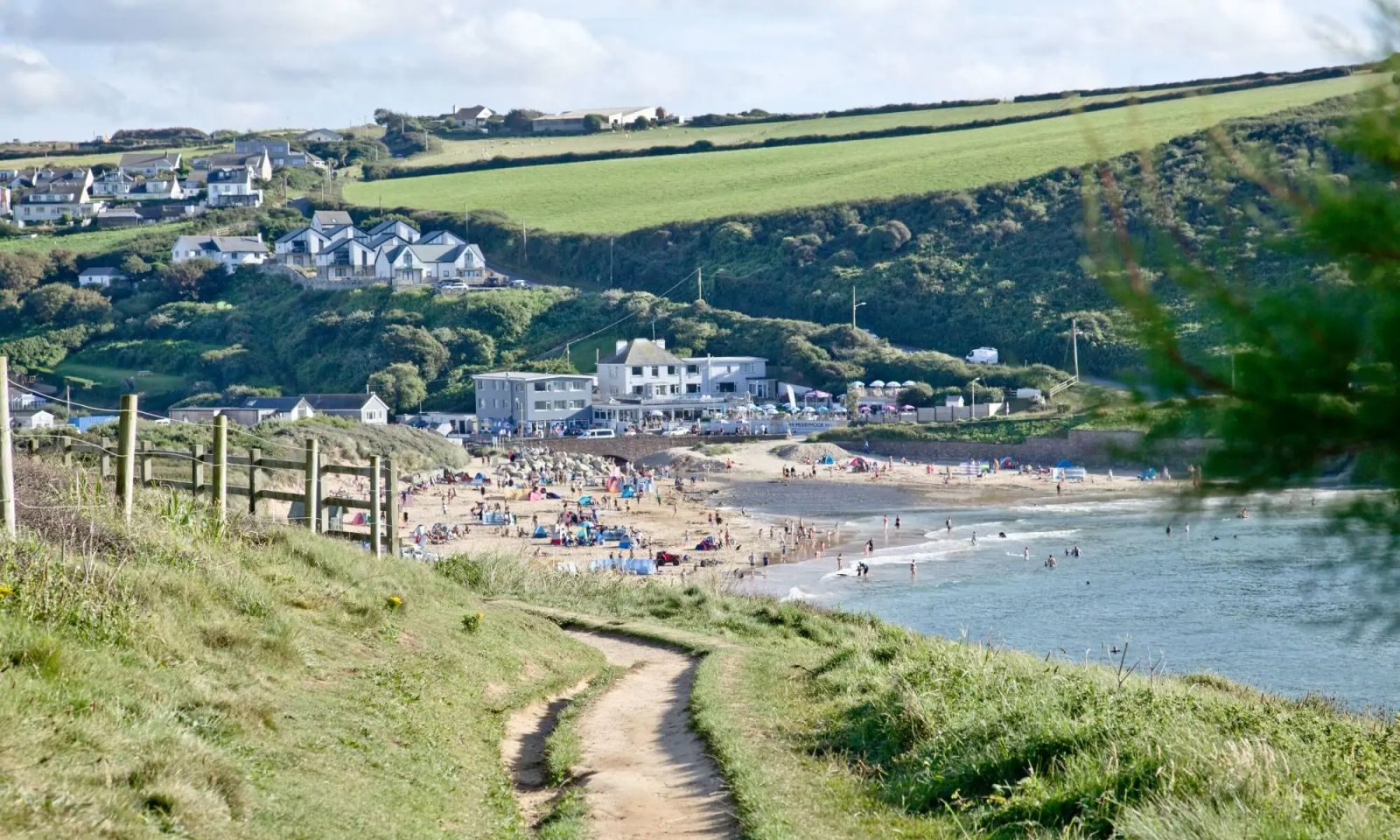
Polzeath is the classic Cornwall learner beach - a half-mile stretch of sand on the north coast near Wadebridge. It picks up consistent swell but the waves tend to crumble rather than dump, giving you time to find your feet. Multiple surf schools operate from the beach and the village has cafes and shops within walking distance. It gets very busy in August, so arrive before 9am or head out for the evening session.
Widemouth Bay near Bude is over 2 miles of sand with forgiving whitewater at the south end. Less crowded than Polzeath, the car park sits right behind the beach, and it’s lifeguarded from May to September. The consistent, mellow waves make it one of the most reliable beginner spots on the north coast.
Harlyn Bay near Padstow faces north-west and is sheltered from the prevailing south-westerly winds, which means it often has cleaner conditions when other beaches are blown out. The bay is compact - roughly 200 metres of sand - so it’s easy to keep track of where you are in the water. Good option for families with young children learning to surf.
Intermediate Surf Beaches
Once you can paddle out consistently, catch green waves, and begin to turn along the face, these breaks will develop your surfing further.
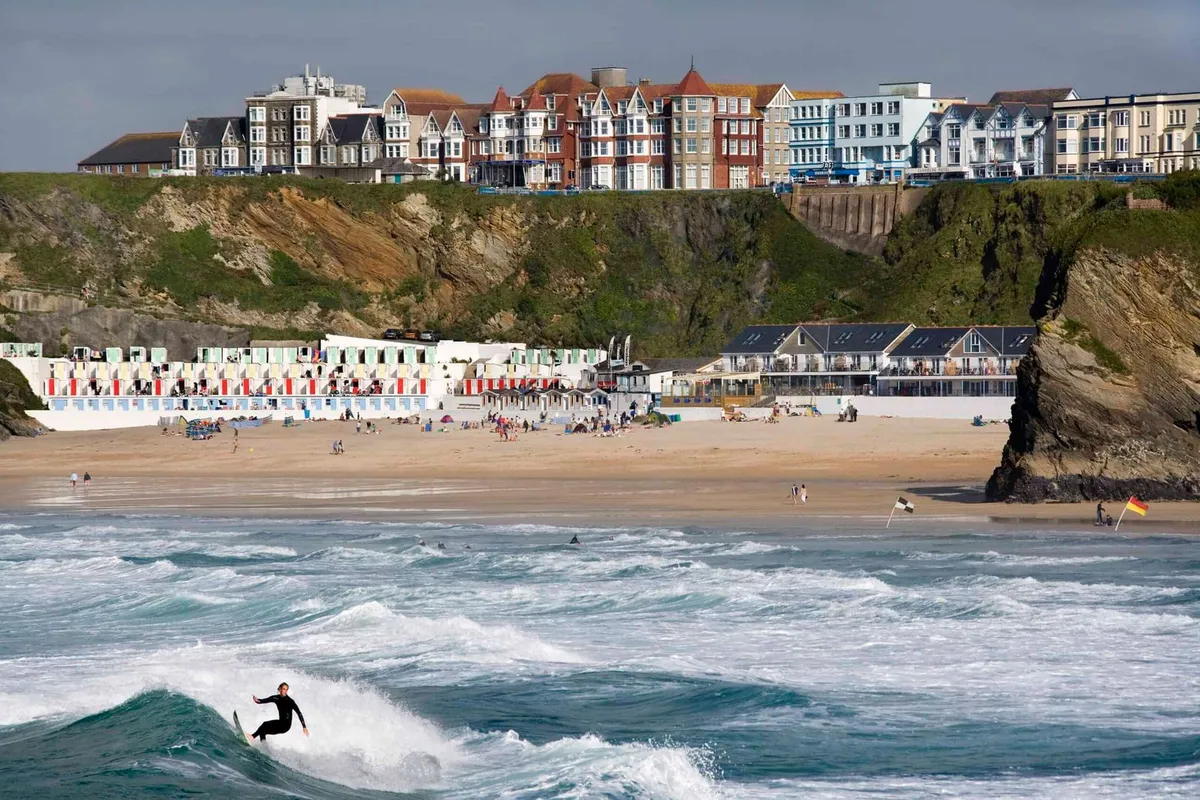
Watergate Bay is 2 miles of sand just north of Newquay. It handles bigger swells better than Fistral thanks to the wider beach, and the peaks are spread out enough to avoid the worst of the crowds. The Extreme Academy operates from the beach, offering wave-ski and kitesurfing sessions if you want to mix things up. The Beach Hut cafe above the sand does solid post-surf food.
Gwithian Towans sits at the western end of St Ives Bay, backed by dunes and stretching for 3 miles. Peaks shift with the sandbanks, so you can often find a quiet section even in summer. Left and right-hand waves break well in chest-to-head-high swells, and the beach picks up more swell than nearby St Ives. Works best in a south-easterly offshore wind.
Praa Sands is a less-visited option on the Lizard peninsula, facing south-west and picking up the same Atlantic groundswell as the north coast. The beach is around a mile long, with a sandbar that produces workable peaks in the 2-4ft range. It’s a good alternative when north coast beaches are over 6ft and too much for intermediates.
Advanced Surf Breaks
These spots are for experienced surfers comfortable in overhead-plus conditions and rip currents.
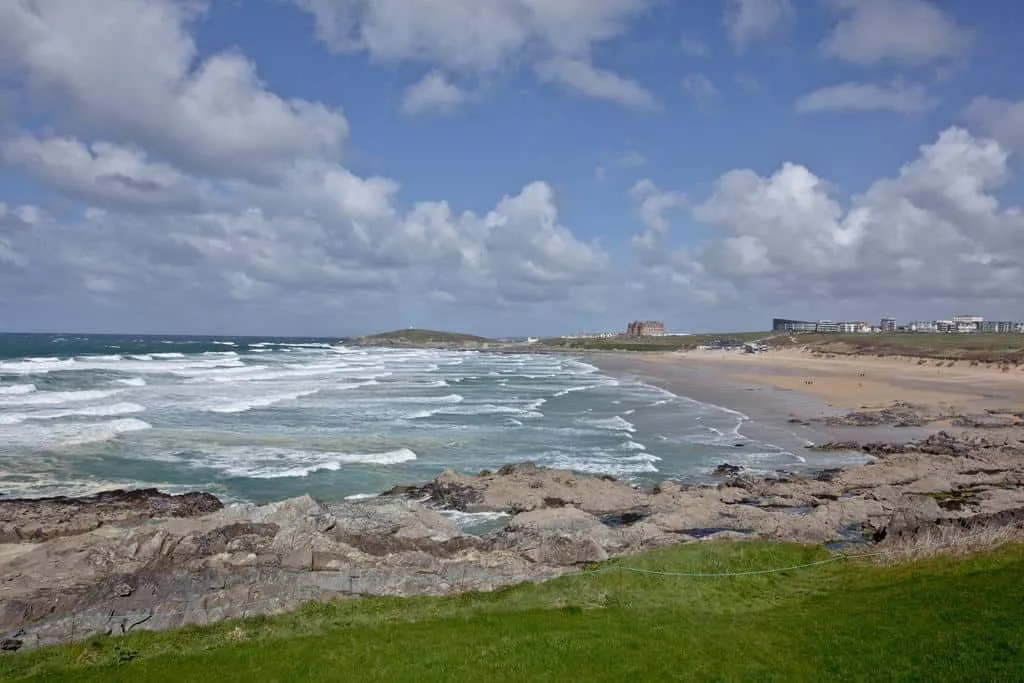
Fistral Beach is the benchmark. The main break - North Fistral - produces powerful, hollow waves on a solid west or north-west swell, particularly on the push of tide. South Fistral is more sheltered and better for intermediates. When a 6ft+ swell hits at mid tide with light offshore winds, Fistral is genuinely world-class. The Cribbar, a big-wave reef break at the north end, occasionally fires on XXL swells and is strictly for experienced gun riders.
Sennen Cove is the most westerly surf beach in Cornwall, a mile from Land’s End. It picks up every scrap of swell in the Atlantic, which means it’s rarely flat. The beach break produces fast, hollow waves, particularly on a dropping tide. Rip currents run along the harbour wall - know where they pull before you paddle out. The Surf Centre on the beach hires boards and wetsuits.
Porthmeor Beach in St Ives sits directly below Tate St Ives - a compact, Atlantic-facing beach that produces punchy, fast waves with short but powerful rides. Offshore in a southerly wind. A good option if you’re staying in St Ives and want surf without driving 6 miles to Gwithian.
Surf Schools and Lessons
Group lessons across Cornwall typically run £35-50 per person for a two-hour beginner session, with all equipment included. Private lessons cost around £100-120 per person for two hours. Most schools operate April to October, with a few running year-round.
Escape Surf School is one of the longest-established operators in Cornwall, based in Newquay with lessons at Fistral, Towan, and Watergate Bay. They offer beginner group lessons, improver sessions, and multi-day surf camps. Booking ahead in July and August is essential - lessons fill within a week or two of the date.
Newquay Activity Centre runs surfing alongside kayaking and coasteering, making it useful if you’re travelling with a group that has mixed interests. Their surf sessions run from Watergate Bay and are available for all ages from 7 upwards.
Errant Surf operates a more boutique model with smaller group sizes - typically no more than 6 per instructor, against the industry norm of 8-10. Based in Newquay, they also run yoga and surfing retreats over long weekends, which suits adults who want a structured week away rather than a one-off lesson.
Board hire across Cornwall runs £15-25 per day depending on board type - foam boards at the lower end, performance shortboards and longboards higher up. Wetsuit hire is typically £5-10 per day. Multi-day rates bring the daily cost down significantly. Most surf shops near the main beaches carry a full range of hire kit.
When to Surf
Summer (June-August): Smaller, cleaner swells, typically 2-4ft. Water peaks around 17-18°C in August and a 3/2mm wetsuit is adequate. Best season for beginners and families. Beaches are busy, particularly at weekends and school holidays.
Autumn (September-November): The strongest season for quality surf. Atlantic low-pressure systems start delivering consistent 4-8ft swells, the water is still relatively warm (13-16°C), and the summer crowds thin out considerably. A 4/3mm wetsuit with boots from mid-October. Many experienced surfers consider September and October the best months.
Winter (December-February): Big, powerful swells - sometimes 10ft+. Water drops to 9-10°C, requiring a 5/4mm wetsuit with boots, gloves, and a hood. Shorter daylight hours and stronger currents. Rewarding if you’re competent, but not the time to learn.
Spring (March-May): Swell consistency drops off but quality waves are still possible, especially in March. Water is at its coldest early in the season (9-10°C) and warms slowly. Expect a 5/4mm or 4/3mm wetsuit depending on the month.
Reading the Forecast
Check conditions before you drive to the beach. Magicseaweed and Surfline both provide free multi-day forecasts for all the main Cornish breaks. Swell height, period, wind direction, and tide times all matter - a 4ft swell at 12 seconds is a very different wave to 4ft at 6 seconds. As a rule of thumb, offshore winds (blowing from land to sea) clean up the wave face; onshore winds make waves messy. Fistral works best in a south-easterly; Gwithian in a south-easterly; Sennen in a north-easterly.
Where to Stay
Newquay is the obvious hub - Fistral, Watergate Bay, and Crantock are all within 10 minutes. The town has the widest range of accommodation, from surf lodges and hostels to self-catering apartments. It’s also the liveliest in the evenings, which suits some and not others.
Bude is quieter and works well if you want Widemouth Bay and Crooklets on your doorstep without the Newquay scene. Good for families.
Padstow and Rock put you near Polzeath, Harlyn Bay, and Constantine Bay - three quality beaches with different orientations, so one of them is usually working whatever the wind does.
St Ives and Hayle give you access to Porthmeor and the 3-mile stretch of Gwithian Towans. St Ives is a good town to spend non-surfing hours in, with restaurants and galleries within walking distance of the beach.
Browse the full accommodation guide to find places to stay near Cornwall’s surf beaches, or check the full beach guide to compare breaks across the county.
Safety
Cornwall’s beaches are lifeguarded by the RNLI from May to September. Always surf between the red and yellow flags, which mark the lifeguarded bathing zone. Black and white chequered flags designate the surf zone.
Rip currents are the main hazard and run at every beach listed here, particularly on bigger tides and larger swells. If you get caught in one, don’t fight it - swim parallel to the beach until you’re clear of the current, then angle back to shore.
Know your limits. If conditions look heavy from the car park, they’ll feel heavier in the water. Choosing a smaller beach on a big day, or sitting one out entirely, is the right call more often than people admit.